Fluoride - for or against?
Fluoride is a micronutrient that has been associated with caries prevention for decades. As the most effective agent to prevent its development, it has been widely used in oral hygiene products around the world until recently. However, in recent years, opinions have been divided on whether fluoride is safe, especially in the context of long-term use.
What is fluoride?
Fluoride is a natural part of our environment. It is found, among other things, in water, soil, air and some foods. It is characterized by high reactivity and chemical activity, so in nature it occurs mainly in the form of fluorides - chemical compounds of fluorine with metals and non-metals. The role of fluoride in dentistry is extremely important. Bacterial plaque in the mouth produces acids that weaken enamel and contribute to the demineralization process. You can read more about these concepts in our previous post. The consequence of demineralization can be tooth sensitivity or tooth decay. Therefore, the role of fluoride in dentistry is very important. Can integrate with tooth tissue, strengthening its structure and making it more resistant.
Why fluoride is added to toothpaste?
In order to prevent the onset and aggravation of unpleasant symptoms, it is necessary, first of all, not to allow the level of acids in the mouth to rise. Fluoride is extremely helpful in the fight against caries-causing bacteria, which are responsible for it. Inhibits their growth, which prevents the accumulation of bacterial plaque. The process that reverses the negative effects of acids in the mouth is remineralization. Due to their ability to initiate and promote this phenomenon, fluoride toothpastes dominate the market. As you remember from our recent article, teeth have a protective coating, which is enamel. It naturally contains a mineral called hydroxyapatite. We use its biocompatible form in SEYSSO toothpastes to further enhance the protective and strengthening effects of the. Others, however, opt for an alternative solution, relying on fluoride. When applied to the tooth surface, fluoride ions react with hydroxyapatite, found in enamel, to form fluoroapatite. By combining two "titaniums," the newly formed compound further strengthens teeth against chemical (such as acids) and mechanical agents.

So what are the disadvantages of using fluoride?
Fluoride has been on the dental market for a very long time. It is a well-known substance that has been subjected to many clinical studies, confirming the effectiveness and safety of fluoride. However, its use has been controversial for several years, and we are hearing more and more about why it is a good idea to stop using fluoride in toothpaste. Here are some of the most commonly discussed risks:
1. Excess fluoride in the body, especially during tooth development, can lead to enamel fluorosis. It causes abnormalities in the structure of the enamel, manifesting as white or brown spots on the teeth. It is a permanent change that cannot be removed by methods of daily care. In extreme cases, fluorosis can lead to a weakening of the enamel structure, increasing the risk of erosion.
2. It is believed that high amounts of fluoride, supplied to the body over many years from numerous sources (water, food, air), can have a negative effect especially on the skeletal system. This is especially true in underdeveloped countries.
3. Despite widespread support and a large number of studies conducted over the years, the public is still divided on whether fluoride is harmful. There is a need for further observation and analysis in this direction.
Fluoride in children's oral care

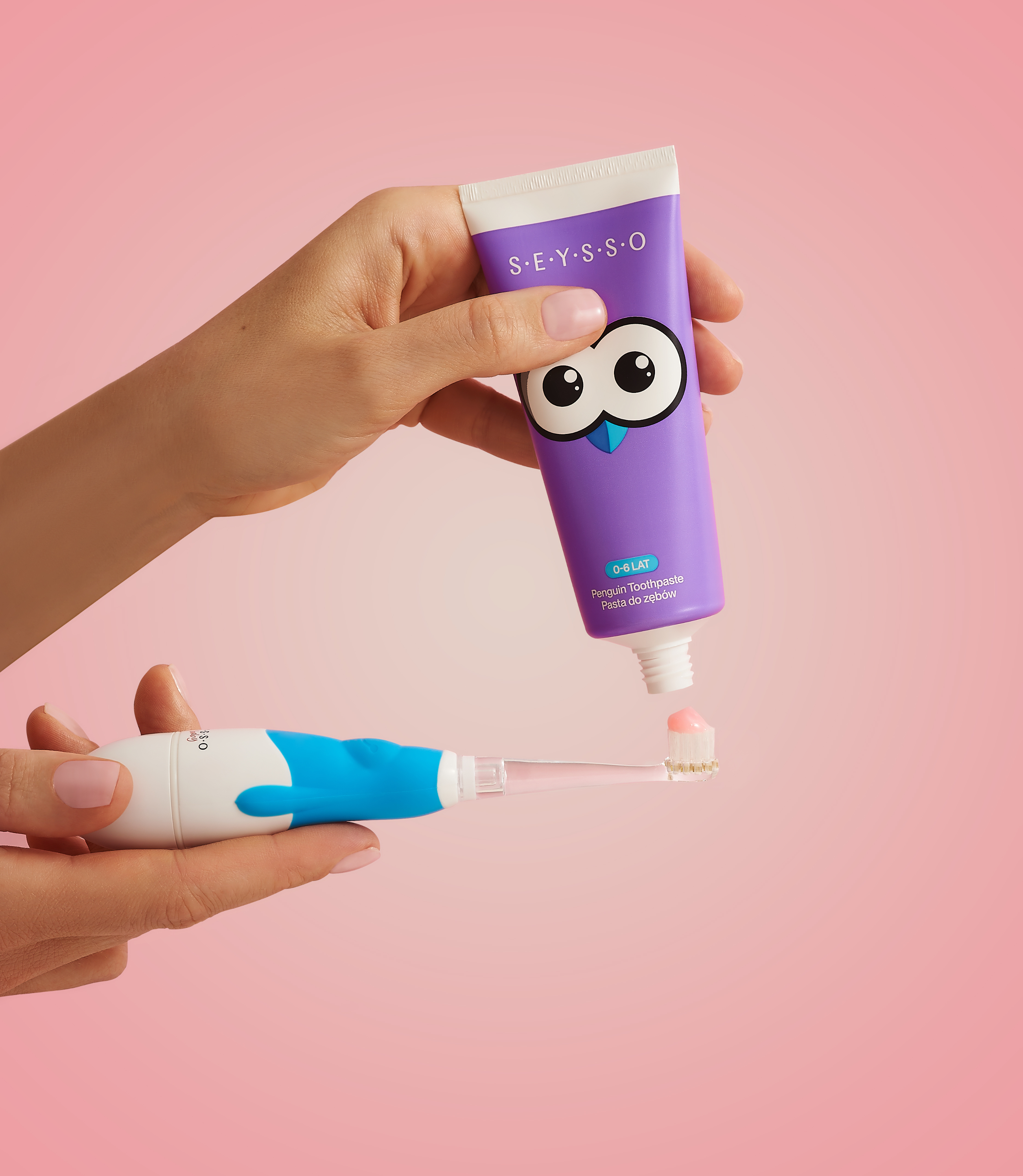
Like everything related to the little ones, the use of fluoride in children requires caution. The most important benefit of fluoride is the prevention of caries in children. This is especially important because our kids are more susceptible to its development than adults are. Today, nearly 98% of children have tooth decay. Using fluoride toothpaste for children can minimize the risk of its occurrence. It is worth remembering that in children's products the concentration of fluoride should be 1000 ppm. As for how much paste to put on the toothbrush - for children under 3 years of age, it is the size of a grain of rice, and for older children - a grain of pea.
Fluoride - is it worth it?
Whether to use toothpaste with or without fluoride is best decided individually and consciously. Above all, we encourage you to pay attention to the dosage of fluoride toothpaste in younger children. It is also worth taking an interest in its additional sources and keeping an eye on the amounts in which it is consumed. Remember that the risk of enamel fluorosis applies only to children under 6.-7. year old. As for adults - prudence is also recommended. In any case, raising doubts, it is best to consult a doctor. Today, the dental market offers a wide range of oral hygiene products. For those avoiding fluoride, finding equally effective substitutes will not be a problem. You may be interested in SEYSSO toothpastes, which base their composition on the natural mineral hydroxyapatite? You will learn about its benefits here.